You're looking at a tree in your yard and something's off. Maybe it's leaning. Maybe there's dead branches up top. Maybe it's gotten so big you're worried about the next storm. The question is simple — does it need a trim or does the whole thing need to come down?
After 24 years of looking at trees across Arkadelphia, Hot Springs, and every town in between, Robbie can usually tell in a few minutes. Here's how to think through it before you call.
When a Trim Is All You Need
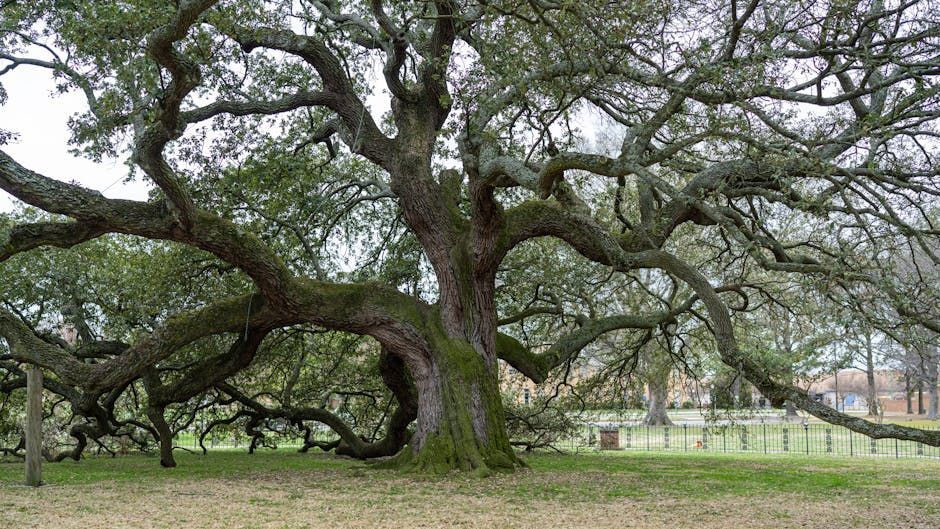
Most trees that look bad just need some work — not a chainsaw to the trunk. Trimming is the right move when the tree is still healthy but it's gotten out of hand.
Branches hitting your roof. We cut them back away from the house so they stop scraping shingles and clogging gutters. The tree stays. Your house stays safe.
Dead branches but a solid trunk. If the main trunk looks good and the big limbs are strong, the dead stuff just needs to come out. We climb up, cut it out, and the tree keeps growing fine.
Too thick to see through. When a tree gets so full that no light or air gets in, the inside branches start dying. We thin it out so the whole tree gets what it needs. This actually makes it stronger in storms.
Branches rubbing together. Two branches grinding against each other wear through the bark. That's an open door for bugs and disease. We take the weaker one out and let the stronger one grow.
Just hasn't been touched in years. If you can't remember the last time someone trimmed it, it's probably overdue. Most trees do well with a good trim every two to three years.
Here's the bottom line — if the trunk is solid, the roots are stable, and the main shape of the tree is good, a trim is usually all it takes.
When the Tree Needs to Come Down
Sometimes a tree is past the point of saving. No amount of trimming will fix a tree that's dying from the inside out or about to fall on your house. Removal is the right call when the tree itself is the problem.
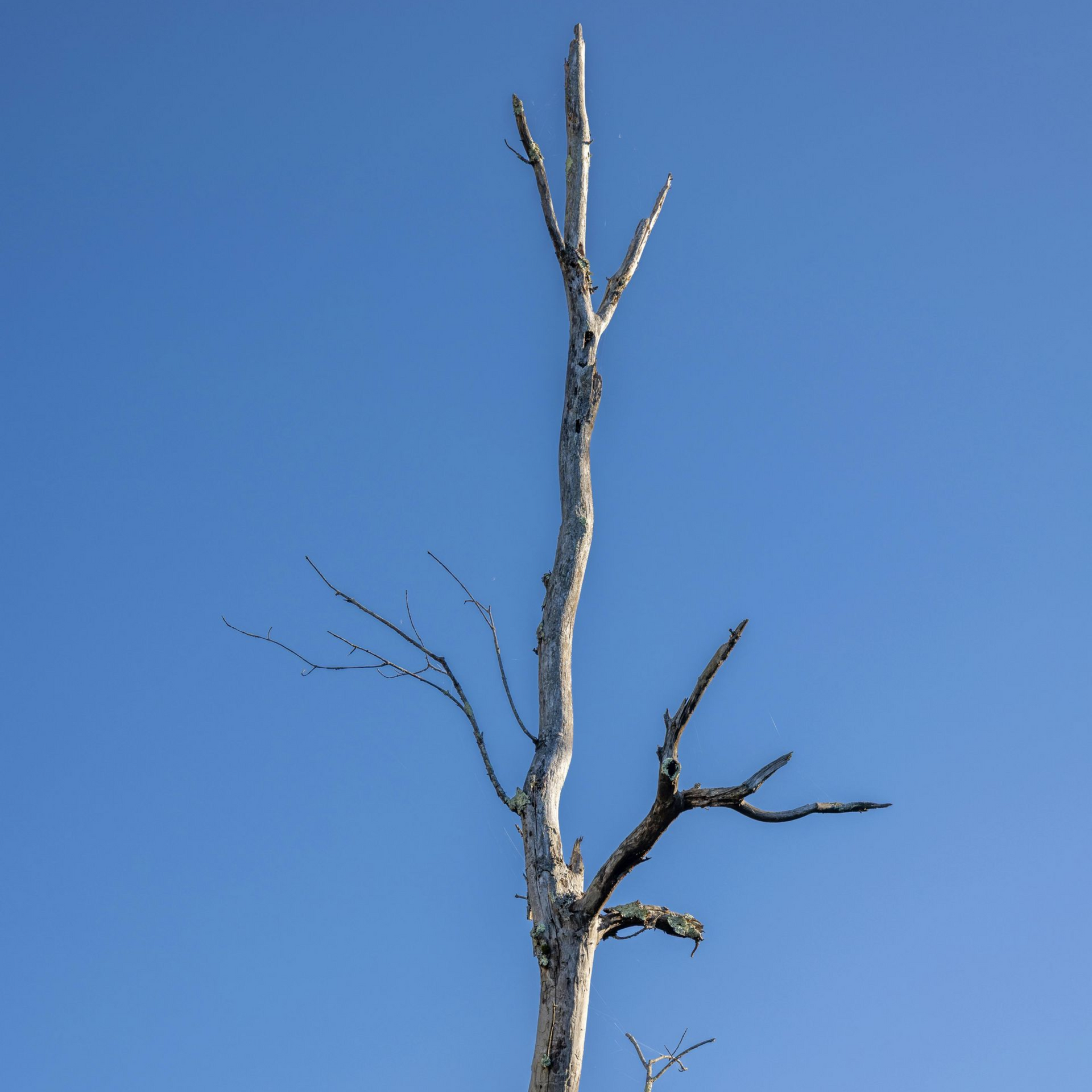
Dead or mostly dead. No leaves when every other tree has them. Bark peeling off in sheets. Branches snapping in light wind. A dead tree won't come back, and it can fall without warning.
Trunk is cracked or split. A crack running down the middle of the trunk means the tree is failing. Trimming won't fix that. The next big storm could split it wide open.
Leaning toward your house. Trees that start leaning more than they used to are telling you the roots are giving out. If it's leaning toward your home, your garage, or your neighbor's fence — don't wait.
Roots are causing damage. Roots pushing up your driveway, cracking your sidewalk, or pressing into your foundation mean the tree is too close and too big. Trimming the top won't stop what's happening underground.
Mushrooms at the base. Fungus growing at the bottom of a tree or on the roots means rot on the inside. The tree might look fine up top but it's hollow and weak where it counts.
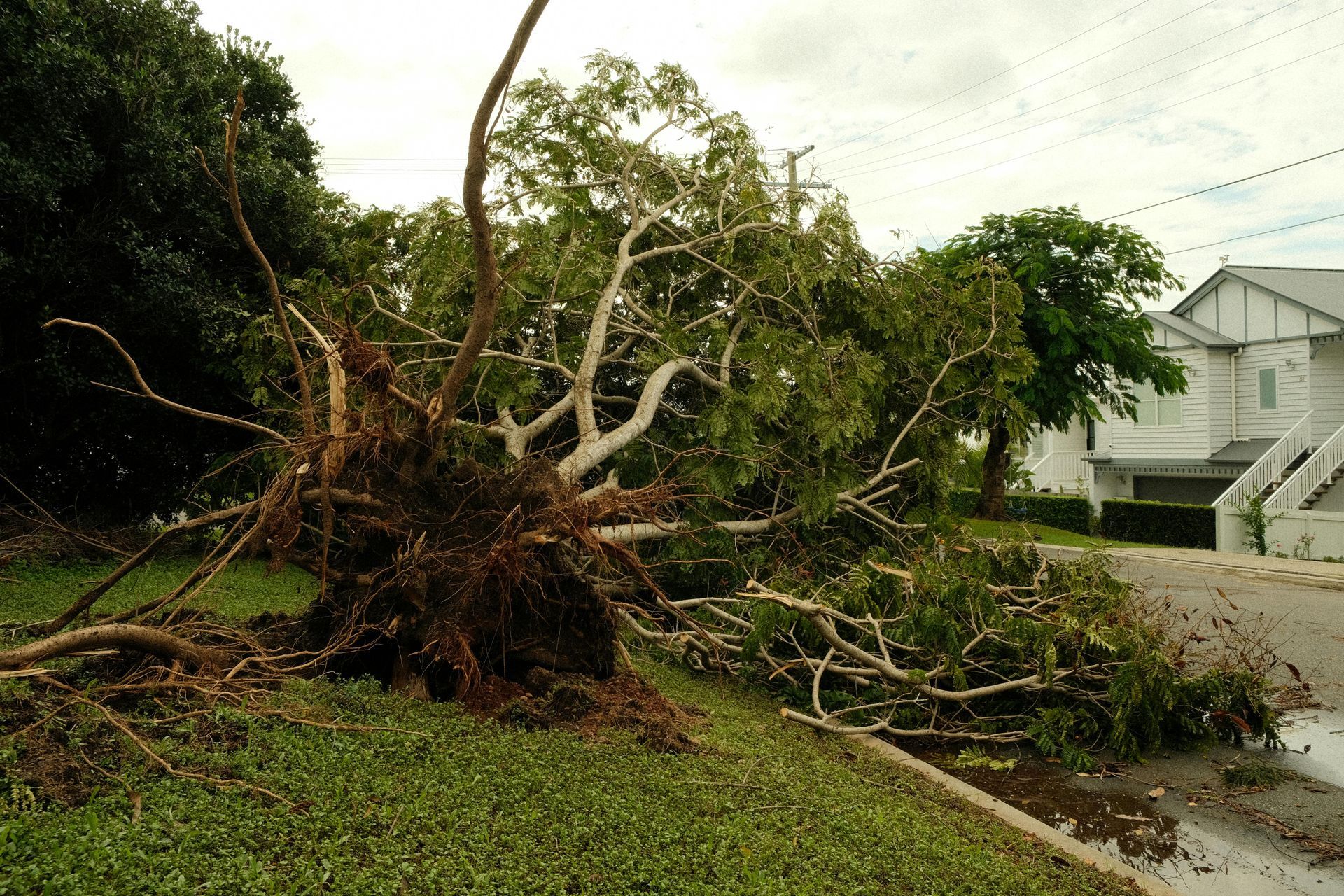
Storm tore it apart. A tree that lost its top, split down the middle, or has big limbs hanging by a thread is dangerous. That's not a trim job — that's emergency removal.
If you see any of these signs, the tree needs to come down before it comes down on its own.
The Gray Area — When You're Not Sure
Some trees fall right in the middle. Maybe half the canopy looks dead but the other half is full of leaves. Maybe there's a crack in one limb but the trunk looks solid. Maybe the tree is old and you just don't know if it's still safe.
That's where 24 years of experience matters. Robbie has looked at thousands of trees across Clark County and the surrounding area. He reads things most people walk right past — how the trunk meets the ground, where the weight sits, what the roots are doing, whether the lean is old or new. Sometimes a tree that looks scary just needs a good trim. Sometimes a tree that looks fine needs to come down tomorrow.
The estimate is free. Robbie will walk your property, look at the tree, and give you a straight answer. If it can be saved with a trim, he'll tell you that. If it needs to come down, he'll tell you that too. We don't push removal when trimming will do the job, and we don't push trimming on a tree that's going to fall on your house.
What Costs More — Trimming or Removal?
Trimming costs less than removal. That's true almost every time. A trim keeps the tree in place and just cleans it up. Removal means taking the whole tree down, cutting it apart, and hauling everything away.
But here's what matters more than the price — getting it right. Spending money to trim a tree that should've been removed means you're paying twice. Once for the trim that didn't fix the problem, and again for the removal when it finally fails. On the other hand, removing a healthy tree you could've just trimmed means losing shade, privacy, and property value for no reason.
That's why we always tell you the truth about what your tree actually needs. No upsell. No guesswork.
Don't Wait on a Tree That Worries You
If a tree in your yard is making you nervous, trust that feeling. Trees that need attention only get worse with time. Dead branches fall. Cracks get wider. Leans get steeper. A trim today can prevent a removal next year. And a removal today can prevent a tree through your roof tonight.
Call Robbie at (870) 245-7944. He'll come look at your tree and tell you what it needs — trim it, take it down, or leave it alone. No charge for the estimate. No pressure.
Get Your Free Estimate →