When Should You Remove a Tree in Arkadelphia? A Homeowner's Guide
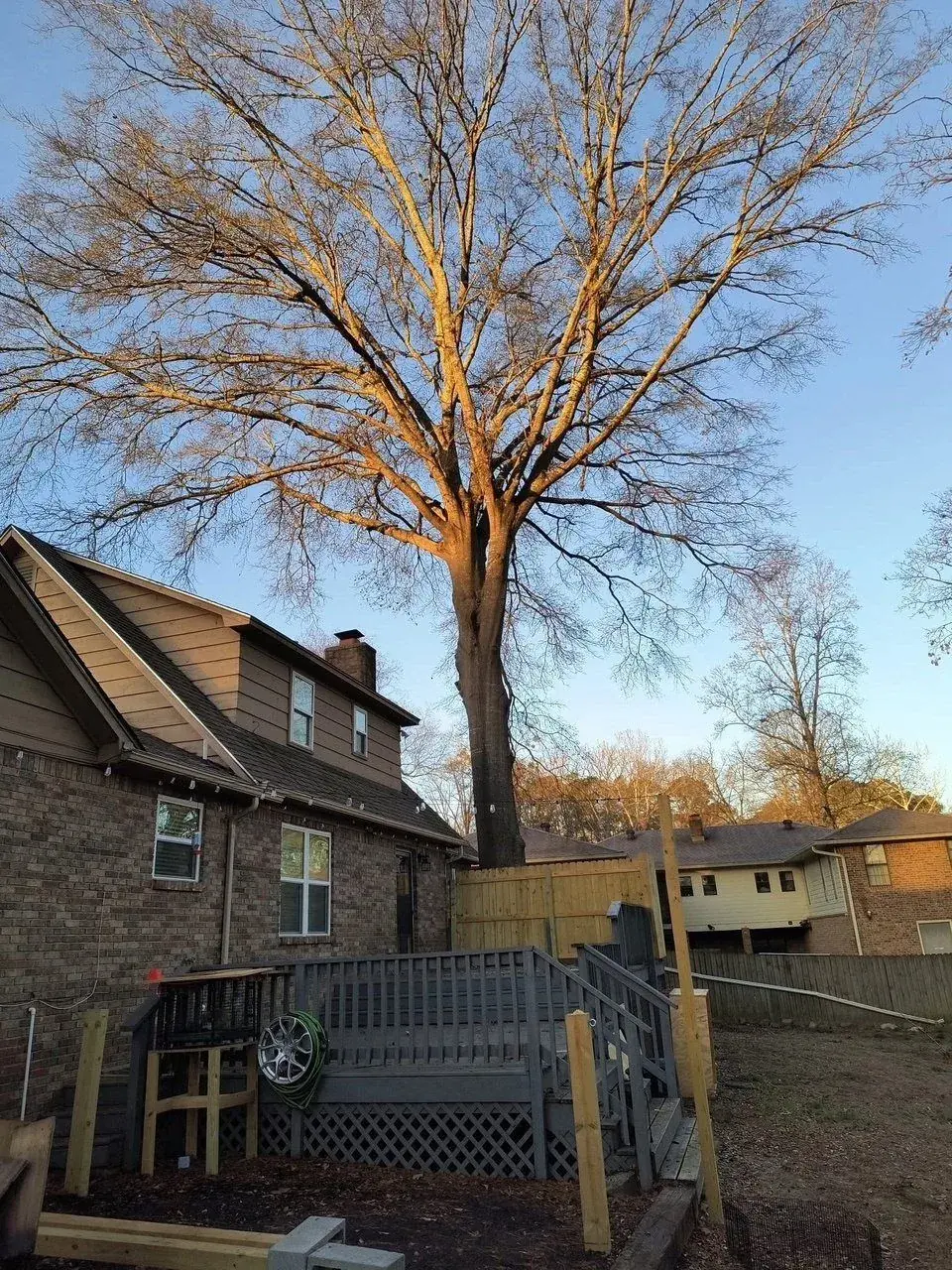
Most of the calls I get start with the same sentence: “I’ve got a tree I’m worried about.” Sometimes that tree needs to come down today. Sometimes it’ll outlive the house. After 24 years of looking at trees in Arkadelphia and across Clark County, I’ve learned the difference usually comes down to a handful of warning signs — and most homeowners can spot them without a pro.
Here’s what I tell people when they walk me out to a tree in their yard. If any of this sounds like the tree you’re staring at, it’s worth getting a real look at it before the next storm comes through.
The Lean
A tree that’s always grown at an angle is usually fine. A tree that started leaning recently is a problem. Look at the base. If you see fresh soil pushed up on one side, exposed roots that didn’t used to be exposed, or a crack in the ground a few feet from the trunk, the root plate is failing. That tree is on the clock.
I see this most often after a big rain on top of already-saturated ground — which in Arkadelphia, with the Caddo and Ouachita rivers right here, happens more than people realize. Loblolly pines lean toward houses constantly because they grow tall and shallow-rooted. The big water oaks in the older neighborhoods off Main Street and 10th Street can hold a lean for years before they let go, but when they go, they take a chunk of the yard with them.
Rule of thumb: if you can see roots lifting out of the dirt or the lean has gotten worse in the last year, get someone out to look. That’s a removal conversation, not a trimming one.
Dead Branches Up Top
Look at the top third of the tree in summer when everything else is leafed out. If you see bare branches or a section of the canopy with no leaves at all — what arborists call “deadwood” — the tree is telling you something. A few dead branches is normal. A whole section dying back from the top is usually a sign the tree is stressed, diseased, or running out of life.
A lot of times this is fixable. We can do a crown cleanup — pull out the dead and dying limbs, take some weight off the structure, and the tree comes back the next season looking healthy. But if more than about a third of the canopy is dead, the tree is past saving and the next ice storm or thunderstorm is going to drop those dead limbs on whatever is underneath them.
Cracks in the Trunk
Vertical cracks in a trunk are how trees fail catastrophically. A tree can look fine — full canopy, no lean, no dead branches — and then split right down the middle in a thunderstorm because the trunk had a crack you didn’t notice.
Walk around the trunk. If you see a crack longer than a few feet, or two cracks running parallel to each other, that’s a structural problem. Same goes for cavities — open holes where wood has rotted out. A small cavity high up isn’t the end of the world. A cavity at the base, where the trunk meets the roots, means the structural wood is going.
I’ve taken down a lot of trees in Arkadelphia where the homeowner had no idea anything was wrong until I pointed out the crack. The 1997 F4 tornado that came through here taught everybody in this town that trees fail fast and unpredictably. The ones that come through us now are the ones that survived that storm and have been quietly losing structural integrity for the 28 years since.
Mushrooms or Fungus at the Base
If you see mushrooms growing out of the trunk or out of the ground right next to the trunk, the tree is rotting from the inside. Fungus feeds on dead wood. Live healthy trees don’t grow mushrooms.
The tricky part is that a tree with internal rot can look fine from the outside for years. The leaves come in, the branches are full, nothing seems wrong. Meanwhile the structural wood inside the trunk is turning to pulp. When that tree finally fails, it usually fails completely — the whole thing comes down at once. If you see fruiting fungus on a tree near your house, your driveway, or a place where people walk, get a pro out to assess it. That’s not a wait-and-see situation.
Storm Damage After the Fact
Clark County gets ice storms every few winters and severe thunderstorms every spring. After a big storm, walk your yard and look at every tree. You’re looking for hanging branches, fresh splits where a limb tore off, and bark that’s been ripped or peeled. A tree that lost a major limb in a storm is now lopsided and stressed — sometimes it can be rebalanced with a careful trim, sometimes it needs to come down.
The dangerous ones are the trees with a hanging branch that didn’t fall all the way. We call those widow-makers. They’ll sit up there for weeks looking stable and then drop on a calm afternoon. If you see one of those, don’t park under it, don’t let kids play under it, and call somebody. We answer storm calls 24/7, including the broken-limb situations that aren’t full-on emergencies but can’t wait either.
Proximity to the House (the Judgment Call)
This is where most homeowners overthink it. A healthy tree close to a house is usually fine. A sick or stressed tree close to a house is a problem. The tree itself is the issue, not the proximity.
That said, there are two situations where I tell people to remove a healthy tree just because of where it is. First, if the tree’s mature height is taller than its distance from the house — a 60-foot tree that’s 40 feet from the house can hit the roof if it falls toward the house. Second, if the tree is dropping limbs on the roof or constantly clogging gutters, the maintenance cost of leaving it standing exceeds the cost of removing it.
A lot of the rentals around Henderson State University and Ouachita Baptist sit on older lots where someone planted a tree 40 years ago that’s now too big for the spot. Those are usually removal jobs, even if the tree looks fine.
When Removal is Not the Answer
Most of the trees I look at don’t need to come down. They need to be trimmed, cleaned up, or just left alone. I tell people that all the time on free estimates — “you don’t need to spend money on this tree, here’s what to watch for, call me back in a couple of years if anything changes.”
Removal is the right call when a tree is actively dangerous, dying, or in a spot where it can’t safely stay. It’s the wrong call when somebody just wants more sunlight in the backyard and the tree itself is healthy. There are usually better options — crown thinning, raising the lower branches, or selective limb removal — that solve the problem without losing the tree.
What Happens After Removal
If a tree does need to come down, the work is more than just dropping it. Whoever you hire should haul off the wood, chip the brush, rake the sawdust, and leave the yard clean. The stump can be ground down 6 to 8 inches below grade so you can plant grass over it or replant something new in the same spot — that’s a separate process called stump grinding, and not every tree service does it. Make sure you ask before the job starts.
Arkadelphia’s sanitation department doesn’t pick up trunks or logs from tree removals — only small limbs under 10 feet. So if your tree service is leaving the wood in your yard for the city to pick up, the city is going to leave it there. Cleanup is part of the job. Don’t pay for a removal that doesn’t include it.
When in Doubt, Get Eyes on It
The honest answer to “should I remove this tree?” is almost always: get somebody who knows what they’re looking at to walk your property. A real estimate from a real arborist costs nothing — it shouldn’t, anyway. We don’t charge for assessments and we don’t push removals that aren’t needed. If your tree is fine, I’ll tell you it’s fine.
If you’re sitting on a tree you’ve been worrying about, give us a call or request a free estimate. Our equipment yard is right here on Country Club Drive in Arkadelphia, so we can usually get out to your property within a day or two — same day if it’s an emergency.
About Plyler’s Tree Service
Plyler’s Tree Service is a Service Area Business based in Arkadelphia, AR, with our equipment yard on Country Club Drive. Owner Robbie Plyler has been doing tree work in Clark County since 2002 — tree removal, trimming, stump grinding, and 24/7 emergency storm response. 5.0 stars across 70+ Google reviews. Licensed and insured. Learn more about our tree service in Arkadelphia.