
Ice Storms and Your Trees: An Arkansas Homeowner's Guide
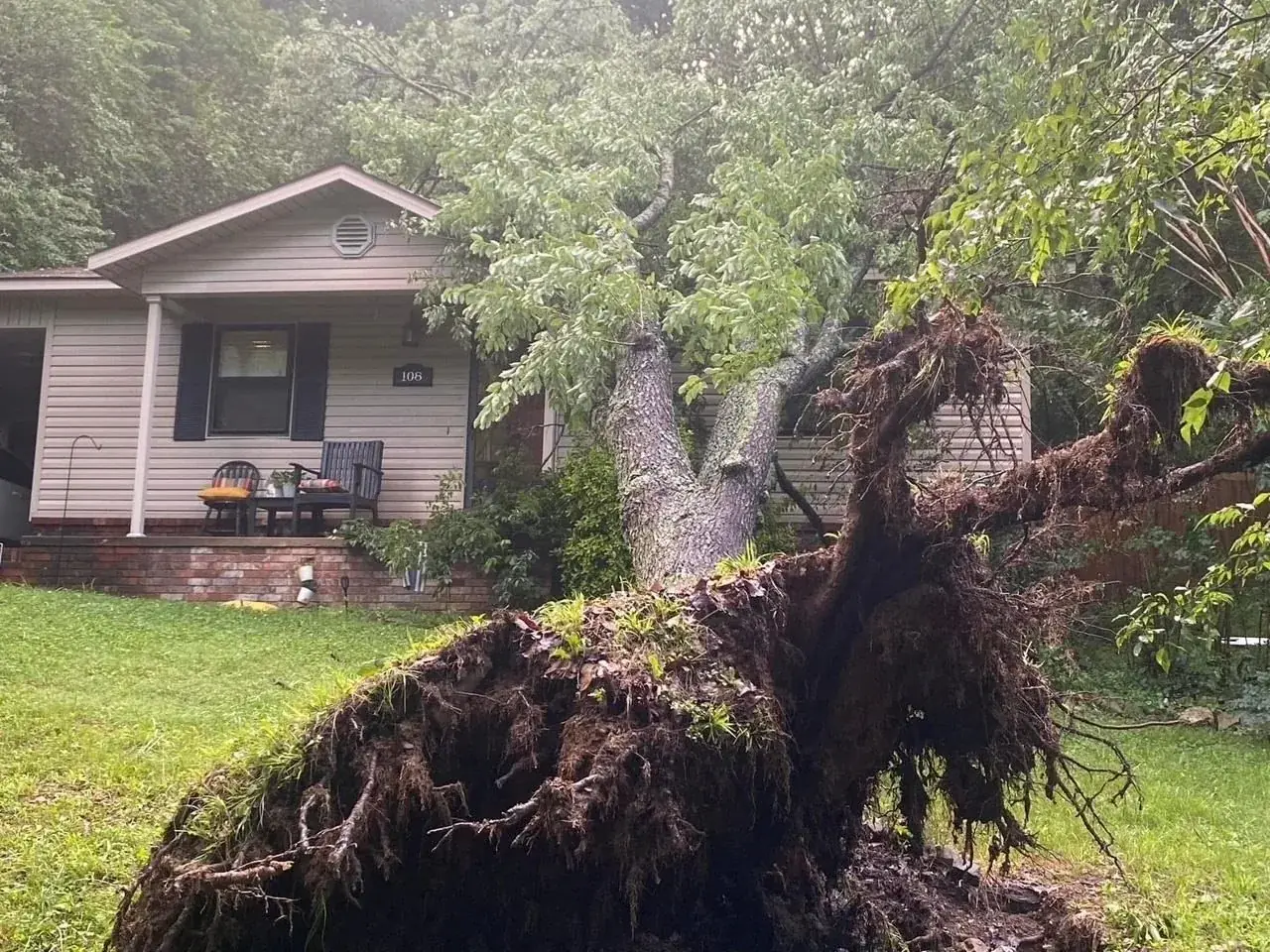
Ask anyone who’s lived in Clark County long enough and they’ll tell you about an ice storm. Not a tornado, an ice storm. Around here, ice takes down more trees, more power lines, and more fences than any other kind of weather, and it does it quietly, over one long cold night.
I’ve spent 24 years cleaning up after them. Here’s what I know about which trees fail, what you can do in the fall to get ahead of it, and what to do when you wake up to limbs on the ground.
Why Ice Is So Hard on Trees
A half inch of ice doesn’t sound like much, but it can add hundreds of pounds to a single limb. The load builds slow and even, all night long, on wood that’s already cold and stiff. Limbs that shrug off a windstorm will snap under ice, because the weight never lets up and never gives the limb a rest.
Pines have it the worst in our area. Loblollies hold their needles year-round, so every needle collects ice, and those tall skinny trunks bend until they either snap or bow over so far they never stand straight again. After a bad glaze, you’ll see whole stands of pine bent like fishing poles along the highway toward Gurdon.
The Trees That Fail First
Some trees on your property are carrying more risk than others, and you can spot most of them from the ground on a Saturday walk:
- Pines with long, heavy tops, especially ones that have grown up crowded and skinny
- Bradford pears, which split down the middle under ice almost on schedule
- Sweetgums and water oaks with V-shaped forks, where two trunks meet in a tight crotch that ice pries apart
- Anything with dead limbs already hanging, because dead wood goes first
- Trees that lost limbs in a past storm, since old wounds are weak points
If one of those is standing over your roof, your driveway, or your power drop, that’s the tree to deal with before December, not after.
What to Do in the Fall, Before the Ice
The cheapest ice storm work is the work done in October. Trimming out dead wood, thinning heavy tops, and taking the weight off limbs over the house removes most of what ice grabs onto. A pine that’s already showing signs of dying should just come down in the fall, because a dead pine under ice is not a question of if, it’s when.
This is also when to look hard at anything close to the house. If you’ve been going back and forth about a tree that’s too close, ice season is the argument that settles it.
When You Wake Up to Damage
The morning after is when people get hurt, so a few rules I hold my own family to:
Stay away from anything touching a power line. A limb on a line, or a line on the ground, is a call to Entergy first and nobody else. No exceptions.
Don’t walk under bent pines. A loblolly bowed over with ice is a loaded spring. They let go without warning, and the ones that don’t snap can whip back upright when the ice melts.
Take photos before anything is moved. If a limb or tree hit the house, fence, or vehicle, your insurance adjuster wants pictures of it exactly where it landed. Photos first, cleanup second. It makes the whole claim easier.
Leave the chainsaw in the shed. Storm-broken limbs are under tension in ways you can’t see, and a limb that’s hung up in a tree overhead is the most dangerous thing in the yard. This is the work emergency crews train for. It is not a weekend job.
Who Handles What: Power Lines, Roads, and Your Yard
After a big glaze, everybody’s phone rings at once, so it helps to know who to call for what. Limbs on power lines and lines on the ground belong to Entergy, and their contract crews handle anything touching their equipment. A tree blocking a county road is the county’s problem, and in town, the city street department handles theirs. Everything inside your property line is on you, which is where a crew like mine comes in.
One thing worth knowing before the storm: if your trees grow into the power drop that runs from the pole to your house, that section is usually the homeowner’s responsibility, not the utility’s. Getting limbs trimmed away from that line in the fall is a small job that prevents a cold, dark week in January.
The Bent-But-Standing Trees
After the melt, you’ll have trees that didn’t break but don’t look right. Young pines bent less than about halfway over will usually straighten themselves within a season. Ones bent past that, or older trees that bowed, mostly won’t recover, and a permanently leaning pine near a structure needs a professional opinion. Same for any tree that lost more than about a third of its crown. Some are worth saving with a good corrective trim, and some are just going to decline slow and get more expensive to remove. Knowing which is which is exactly what a free estimate is for.
About Plyler’s Tree Service
Plyler’s Tree Service has served Arkadelphia and Clark County since 2002. Owner Robbie Plyler and his crew handle tree removal, trimming, stump grinding, and emergency storm work across Clark, Hot Spring, Garland, and Pike counties, including Hot Springs and the lake areas. Fully insured, with over 70 five-star Google reviews.
Need a tree handled? Get a free estimate today.
Call (870) 245-7944 or request a free quote. The best time to storm-proof your trees is before the first cold snap.