Does Insurance Cover Tree Removal in Arkansas? What Homeowners Should Know
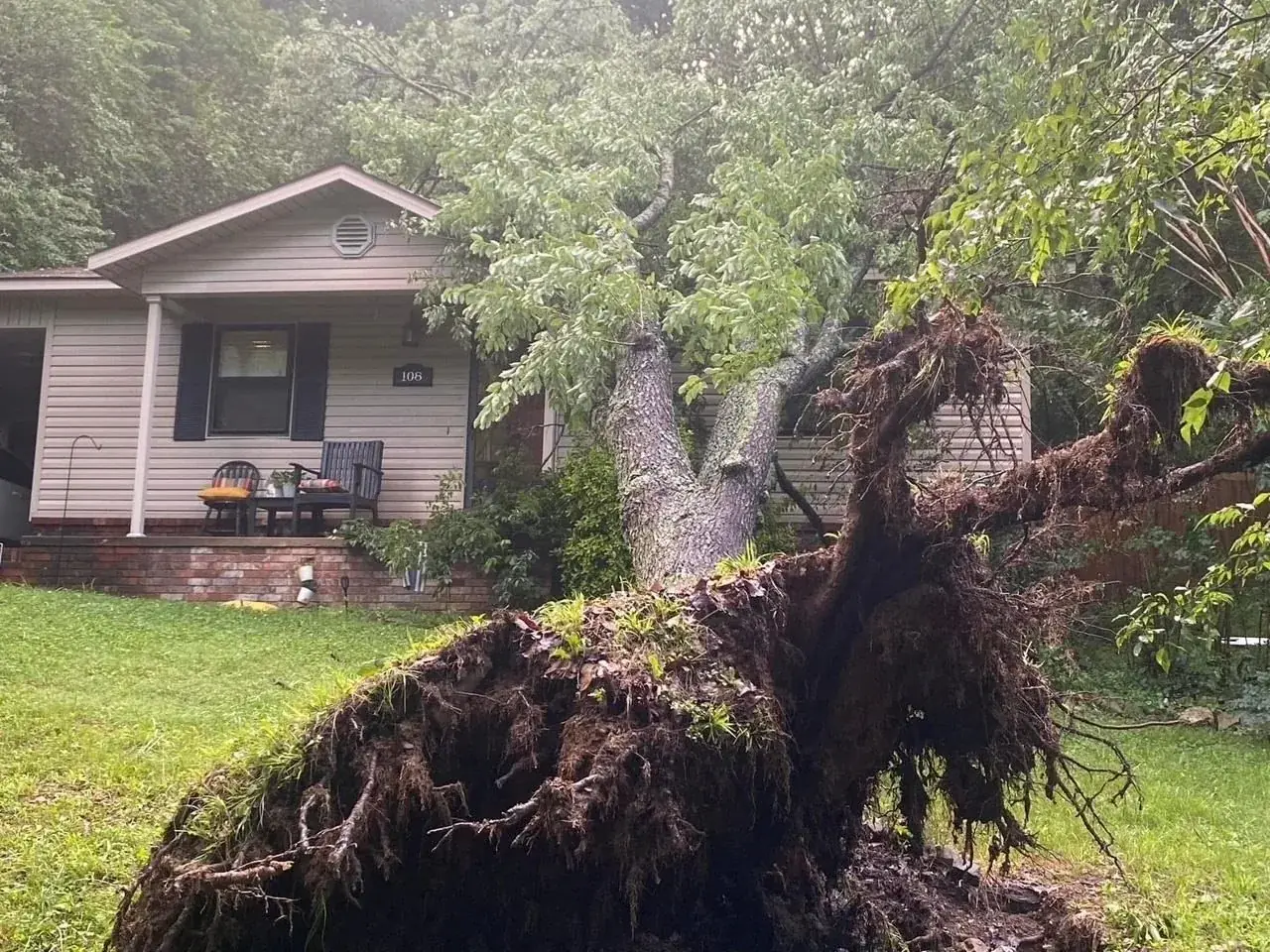
When a tree comes down on a house, the second call is always to me. The first call is to the insurance company, and that’s the call people hang up from confused. Over 24 years of storm work in Clark County, I’ve stood in a lot of yards while a homeowner tried to figure out what their policy actually covers.
I’m not an insurance agent or a lawyer, and your policy is the final word. But I’ve watched hundreds of these claims play out, and the same patterns show up every time. Here’s the plain version.
The Rule of Thumb: It’s About What the Tree Hit
Insurance usually isn’t about the tree at all. It’s about the damage the tree caused. If a storm drops a tree on your house, garage, fence, or another covered structure, the removal and the repairs are generally part of the claim.
If that same storm drops the same tree in the middle of your yard and it doesn’t hit anything, most policies treat that as your cleanup, not theirs. Some policies chip in a small amount for debris removal after a named storm, but a tree lying quietly in the grass is usually the homeowner’s bill.
The Standing Dead Tree Problem
Here’s the one that surprises people. A dead tree standing in your yard is considered maintenance, and insurance doesn’t pay for maintenance. Worse than that, if a tree you knew was dead falls on the house later, the insurance company can push back on the claim, arguing you neglected a known hazard.
That’s the practical reason not to sit on a dying tree. Removing it while it’s standing is a bill you control. Waiting turns it into a bigger bill, a possible claim fight, and a hole in your roof, all at once. A dead tree in Arkadelphia never gets cheaper by waiting.
Whose Problem Is the Neighbor’s Tree?
This one causes more fence-line arguments than anything else in my line of work. The general rule in Arkansas works like this: it’s not about whose tree it was, it’s about whose property it landed on.
If your neighbor’s healthy oak blows over in a storm and lands on your shop, that’s typically your insurance claim, not theirs. A storm is nobody’s fault. Your policy covers your property, and their policy covers theirs.
It can shift when the tree was a known hazard. If their tree was visibly dead, you told them about it in writing, and it still came down on your place, their side may carry some of the responsibility. That’s exactly why the letter matters. If a neighbor’s dead tree worries you, put the concern in writing and keep a copy. You’d rather never need it than need it and not have it.
And one warning from the other direction: never cut a tree on someone else’s property, even a limb-for-limb trade you think is fair. Arkansas has timber trespass laws with real penalties, and “I thought it was on my side” is an expensive sentence.
What to Do the Day It Happens
The first hours after a tree hits a structure decide how smooth the claim goes:
Photograph everything before anything moves. The tree on the roof, the fence under the limb, the whole scene from several angles. Adjusters work from pictures, and a tree that’s already been cut up tells them nothing.
Call your insurance company before the cleanup crew. Get the claim number started. Most companies are fine with emergency work to prevent further damage, like getting weight off a roof or tarping a hole, but they want to know first.
Keep every receipt. Removal, tarping, repairs, even the motel night if the house isn’t safe. It all belongs in the file.
Get the removal documented in writing. A written invoice that describes the tree, the damage, and the work supports the claim. It’s part of why I put everything on paper.
Storm Season Is Not the Time to Find Out
The cheapest insurance move a homeowner can make costs nothing: walk your property line in the fall and look up. Trees leaning toward the house, dead tops over the driveway, a neighbor’s pine aimed at your roof. Handle the ones on your side, send the letter about the ones on theirs, and storm season gets a lot less expensive.
If you’re not sure whether a tree is a hazard or just ugly, that’s what a free look is for. I’ll tell you straight if it’s fine, and I’d rather tell you it’s fine than remove a healthy tree.
About Plyler’s Tree Service
Plyler’s Tree Service has served Arkadelphia and Clark County since 2002. Owner Robbie Plyler and his crew handle tree removal, trimming, stump grinding, and emergency storm work across Clark, Hot Spring, Garland, and Pike counties. Fully insured, with over 70 five-star Google reviews.
Need a tree handled? Get a free estimate today.
Call (870) 245-7944 or request a free quote. Before the storm beats you to it.