How Much Does Tree Removal Cost in Arkansas? (What Actually Sets the Price)
The first question I get on almost every call is the same one: “What’s this going to cost me?” Fair question, and it’s the one question most tree services dodge. You get vague answers, or you get a lowball number that somehow grows once the truck shows up in your driveway.
Here’s my honest answer after 24 years of removing trees in Arkadelphia and across Clark County: I can’t give you a real price without seeing the tree, and neither can anyone else. What I can do is show you exactly what makes one job cost more than another. Once you understand that, you can look at your own tree and know roughly where it falls, and you’ll spot a bad quote from a mile away.
Why You Won’t Find a Price List Here
Anyone who publishes a price list for tree removal is guessing, and you’re the one who pays when the guess is wrong. Two trees the same height can be completely different jobs. One is a two-hour drop in an open yard. The other is a full day of roping limbs down over a roof.
So instead of numbers that would be wrong half the time, here’s what actually sets the price. Every quote I write comes down to four things: size, species, position, and timing.
Size Is the Biggest Factor
Height drives everything, plain and simple. A taller tree means more wood, more time, more risk, and bigger equipment.
A small ornamental tree, your dogwoods, redbuds, and young cedars, comes down fast when there’s room to work, and the cleanup is light. Most yard trees in Clark County fall in the middle range, 30 to 60 feet, and that’s where most of my work lives. Once a tree passes 60 feet, you’re into full-crew territory with climbing or a bucket truck and a long day. The true giants, 80 feet and up, mostly show up on older properties and wooded lots near DeGray Lake, and those are serious projects priced accordingly.
Trunk diameter matters too. A thick trunk means more cutting, more hauling, and more hours, even on a shorter tree.
Pine vs. Oak: Why Species Matters
Clark County is pine country. Loblolly and shortleaf pines are the most common removals I do, and they’re usually the most straightforward. Pines grow tall and narrow with a lean you can read from the ground, so pine removal often costs less than a hardwood of the same height.
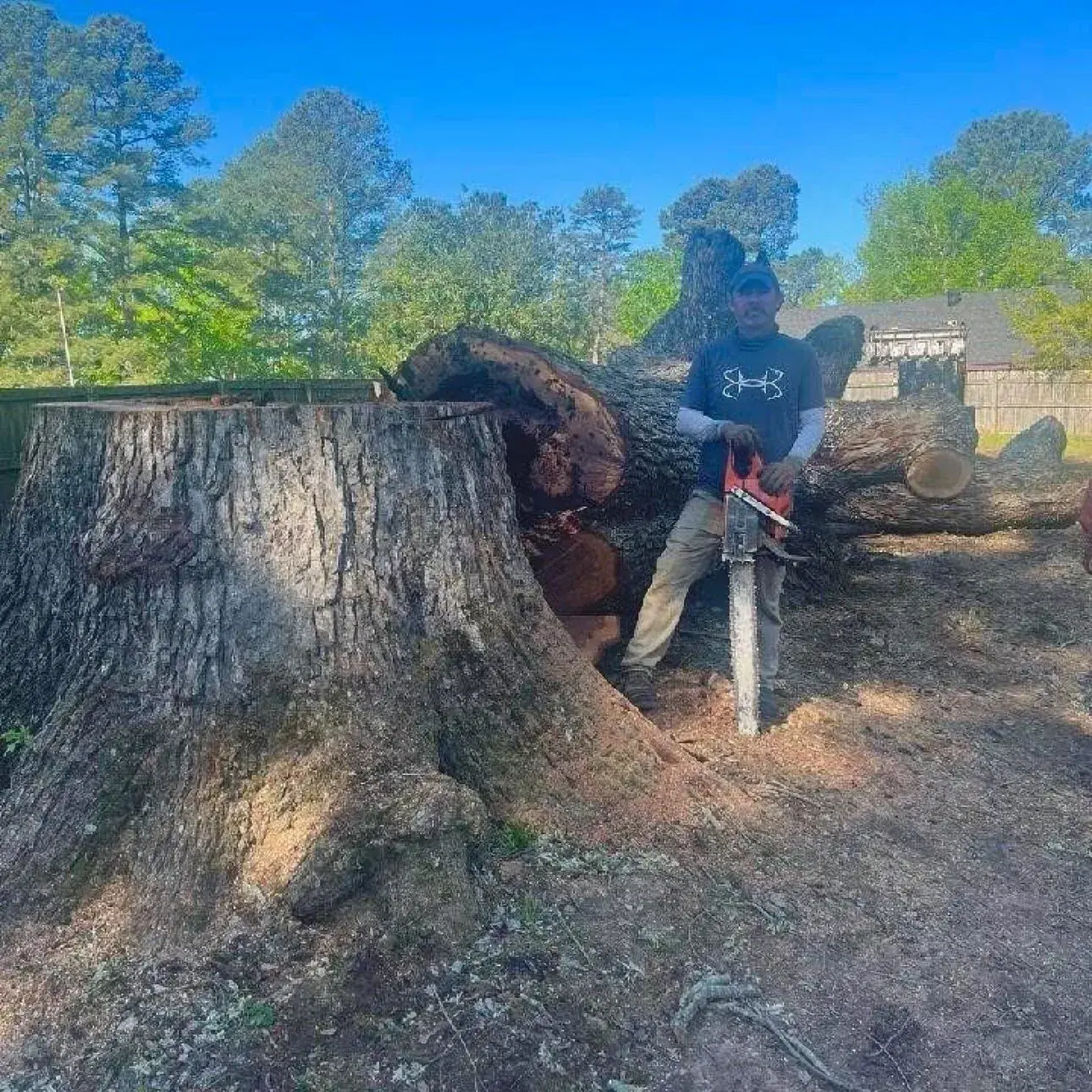
Oaks are a different animal altogether. A mature oak has a wide, heavy canopy with big limbs going every direction. There’s more wood in a 50-foot oak than in a 70-foot pine, and every one of those big limbs has to be rigged and lowered with care. Same height, noticeably bigger job.
Dead trees cost more too, whatever the species. Dead wood is brittle and unpredictable, and that makes the job slower and more dangerous for everyone on my crew.
Where the Tree Stands Matters as Much as the Tree
Two identical trees can be very different jobs depending on what’s around them. A 50-foot pine standing in an open pasture outside Amity is a simple drop. The same pine ten feet from your house in town has to come down in pieces, top first, with every section roped and lowered. That difference can double the job, sometimes more.
Things that push the price up:
- The tree leans over a house, garage, fence, or power line
- Equipment can’t reach it, so the whole job is done by climbing
- Tight backyard access through a gate or between houses
- Slopes, soft ground, or lakefront lots where trucks can’t get close
When I quote a job, what I’m really pricing is the risk and the hours involved, not just the tree itself.
Storm and Emergency Work Costs More
A tree on your house at 2 a.m. is not a scheduled job. Emergency removal runs above normal rates, and it should. The crew is working nights or weekends, often in bad weather, on a tree that’s already broken and loaded with tension, and that’s the most dangerous work we do.
One piece of advice: if a storm-damaged tree is on a structure, take photos before anyone touches it. Your insurance company will want them, and good photos taken early make the whole claim go smoother.
Don’t Forget the Stump
Most quotes don’t include the stump unless you ask. Stump grinding is priced by the diameter of the stump, and if we’re already on site for the removal, adding it is cheaper than having anyone come back out later, so ask for it in the same quote.
How to Keep the Cost Down
A few honest ways to save money without cutting corners:
Bundle your trees. If three trees need to come down, doing them in one visit is cheaper than three separate trips. The crew and equipment are already there.
Don’t wait on a dying tree. A dying tree gets more expensive to remove every year. Once it’s fully dead and brittle, the price goes up and so does the danger.
Schedule in the slow season. Late fall and winter are quieter for tree work, which means more room in the schedule and sometimes more room in the price.
Get more than one quote. I’ll say it even though I’m one of the quotes. Prices for the same job can vary a lot between companies in this area. Just make sure everyone quoting is insured. A cheap quote from an uninsured crew isn’t cheap if something goes wrong on your property.
The Only Number That Matters Is a Written Quote
The lean, the rot, the wires, what’s under the canopy — none of that shows up in a phone call or a price chart, and it’s what the price is made of. Anyone who hands you a firm number without laying eyes on the tree is guessing, and the guess usually gets corrected on job day, in their favor.
That’s why estimates are free. I’d rather drive out, look at the tree, and give you a real number in writing you can count on, with no surprises when the work is done.
About Plyler’s Tree Service
Plyler’s Tree Service has served Arkadelphia and Clark County since 2002. Owner Robbie Plyler and his crew handle tree removal, trimming, stump grinding, and emergency storm work across Clark, Hot Spring, Garland, and Pike counties. Fully insured, with over 70 five-star Google reviews.
Need a tree handled? Get a free estimate today.
Call (870) 245-7944 or request a free quote. We’ll take a look and give you an honest number.